Book Review: Rehabilitating Lochner

Legal System, Non-Fiction Reviews
Share

In the Winter 2012 Independent Review, I review David Bernstein’s Rehabilitating Lochner: Defending Individual Rights Against Progressive Reform. Here’s how it starts:

Few Supreme Court cases receive more scorn in U.S. law schools than Lochner v. New York (198 U.S. 45), the 1905 decision that struck down a New York law limiting the number of hours that bakers could work as a violation of the Fourteenth Amendment’s Due Process Clause. It’s safe to say that most legal academics and judges today believe that the Lochner Court engaged in extraordinarily outrageous “judicial activism” motivated by a devotion to extreme libertarian ideology, big business, or both.

In Rehabilitating Lochner: Defending Individual Rights Against Progressive Reform, George Mason University law professor David Bernstein makes the case that the conventional view is wrong. He provides persuasive evidence that Lochner does not deserve to be singled out as an especially activist or offensive case and that Lochner‘s Progressive critics were the real activists with a much more disturbing agenda.

Read the rest.

Book Review: Rehabilitating Lochner Read Post »

Top 10 Libertarian Books for Christmas 2011

Anti-Statism, Education, Non-Fiction Reviews
Share

Every year, I like to construct a list of some of the best books released in the past year and a few a others that are worth recommending at any time. Of course, this is my opinion, but if you’re looking for a gift for your libertarian loved one this Christmas season then perhaps you’ll give one of these books a go. So without further adieu, the Top 10 Libertarian Books for Christmas 2011!

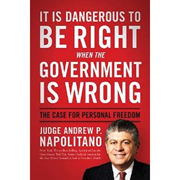
It Is Dangerous to Be Right When Governments Is Wrong by Judge Andrew Napolitano1. It is Dangerous to Be Right When the Government is Wrong by Andrew Napolitano – The Judge, host of FreedomWatch on Fox Business, has put together an amazing book that analyzes a host of topics from the standpoint of natural law. I will be reviewing this book on my personal website soon but I’m going to say it now – you need to read this book. The data and stories he presents in the book make it easily worth every penny, and it deserves a prominent place on your (or anyone else’s) bookshelf.

2. Libertarianism Today by Jacob Huebert – This book was on the list last year, but it warrants another mention because you can get it at a significantly reduced price by purchasing directly from the publisher. Huebert’s book is definitely a must-read, and is one of the best recent books on hardcore libertarianism in the past few years. LRC writer Laurence Vance has called it, “The best introduction to libertarianism on the market.”

3. Bourbon for Breakfast and It’s a Jetsons World by Jeffrey Tucker – Check out this review of Bourbon for Breakfast, and you’ll see that it is a super read for anyone looking to circumvent statist restrictions upon their lives. Tucker’s followup work tells exciting stories of the little everyday miracles of the free market at work.

Top 10 Libertarian Books for Christmas 2011 Read Post »

Thoughts on Tabarrok’s Launching the Innovation Revolution

IP Law, Non-Fiction Reviews
Share

After reviews by Bryan Caplan and our own Stephan Kinsella got my attention, I read Alexander Tabarrok’s new “TED” e-book, Launching the Innovation Revolution.

I went in with an open mind, ready to applaud practical suggestions for incrementally increasing freedom in the area of intellectual property, even if Tabarrok didn’t endorse abolishing the entire patent system as I do. But I was still disappointed.

To Tabarrok’s credit, he does start by showing why patents aren’t necessary to have innovation (at least, he says, in most fields), and he does argue for shorter patent terms (for some things) and less patent protection (for some things). That’s all fine, as far as it goes.

Unfortunately, too much of the book is devoted to promoting new central-planning schemes that Tabarrok thinks would work better than current government programs. Kinsella discusses some of them in an update to his original review; I’ll discuss a couple more.

Thoughts on Tabarrok’s Launching the Innovation Revolution Read Post »

Is Power Stupid or Smart?

Fiction Reviews (Movies), Vulgar Politics
Share

If you seek power over others, how much of an advantage does raw intelligence gain you?

If you look at the makeup of the U.S. Congress — which now has a 9% percent approval rating — or if you watch the Republican debates, you are not immediately inclined to label either the smart set.  In fact, you have to be a dim bulb to repeatedly say many of the things that seem necessary for electability. On the other hand, a certain amount of cleverness is obviously necessary to outwit the media and your opponents.

Which is it? Two films that explore the relationship between power and brains are “Being There” (1979) and “Limitless” (2011). The films came out thirty years apart but deal with the same issues. “Being There” suggests that being dumb as a chicken is a huge advantage for those who seek political success. “Limitless” suggests that politics is the inevitable trajectory of a person who is far more intelligent than everyone else. Which is more realistic?

I’ll state my own view up front: politics is a gigantic waste of brains. If a person really has a gift for high-level thought, almost any profession would be a greater better to society and probably more self-fulfilling in the long run. Whereas it was probably once true that the political life attracted some of the best and brightest, it no longer seems true at all today.

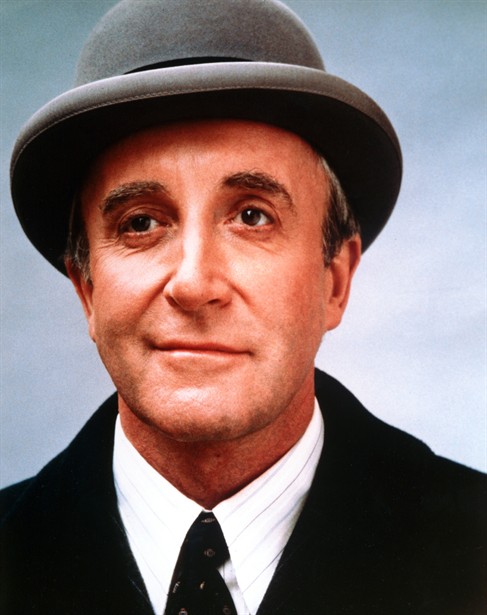
“Being There” is both hilarious and serious, worth sitting down with at least once every few elections seasons. Peter Sellers and Shirley MacLaine star in this adaptation of a novel by Jerzy Kosinski about an illiterate and simple-minded man named Chance who happened to be in the right place at the right time. His utterances are few and most concern what he has done his entire life, which has been to tend one garden on one estate and otherwise watch television. …

Is Power Stupid or Smart? Read Post »

Power, Both Pathetic and Terrifying

Fiction Reviews (Movies), Police Statism, Pop Culture
Share

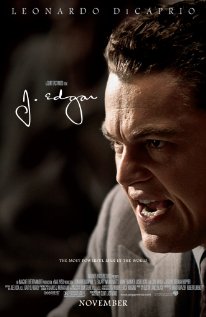
J. Edgar, the new film directed by Clint Eastwood and starring Leonardo DiCaprio, is making the news for dealing frankly with the decades old rumors concerning Hoover’s private life. But that’s not what makes the film immensely valuable. Its finest contributions are its portrait of the psycho-pathologies of the powerful and its chronicle of the step-by-step rise of the American police state from the interwar years through the first Nixon term.

The current generation might imagine that the egregious overreaching of the state in the name of security is something new, perhaps beginning after 9/11. The film shows that the roots stretch back to 1919, with Hoover’s position at the Justice Department’s Bureau of Investigation under attorney general A. Mitchell Palmer. Here we see the onset of the preconditions that made possible the American leviathan.

Palmer had been personally targeted in a series of bomb attacks launched by communist-anarchists who were pursuing vendettas for the government’s treatment of political dissidents during the first world war. These bombings unleashed the first great “red scare” in American history and furnished the pretext for a gigantic increase in federal power in the name of providing security. In a nationwide sweep, more than 60,000 people were targeted, 10,000 arrested, 3,500 were detained, and 556 people were deported. The Washington Post editorial page approved: “There is no time to waste on hairsplitting over infringement of liberties.”

Here we have the model for how the government grows. The government stirs up some extremists, who then respond, thereby providing the excuse the government needs for more gaining more power over everyone’s lives. The people in power use the language of security but what’s really going on here is all about the power, prestige, and ultimate safety of the governing elite, who rightly assume that they are ones in the cross hairs. Meanwhile, in the culture of fear that grips the country – fear of both public and private violence – official organs of opinion feel compelled to go along, while most everyone else remains quiet and lets it all happen.

The remarkable thing about the life of Hoover is his longevity in power at every step of the way. With every new frenzy, every shift in the political wind, every new high profile case, he was able to use the events of the day to successfully argue for eliminating the traditional limits on federal police power. One by one the limitations fell, allowing him to build his empire of spying, intimidation, and violence, regardless of who happened to be the president at the time.

Power, Both Pathetic and Terrifying Read Post »

Scroll to Top