The Best Introduction to Libertarianism Ever

Non-Fiction Reviews, Statism, The Basics
Share

I am not exaggerating: this is what Jacob Huebert’s just-published book Libertarianism Today is [Scribd version; PDF; Amazon; Mises store; online at https://b-ok dot cc/book/1270024/2f0d43]. I’ve been a libertarian for over 25 years, and have read a lot of libertarian books. I am sure I was one of Laissez Faire Books‘s biggest customers in its heyday in the 80s and 90s. Among introductions to libertarianism I’ve read are Murray Rothbard’s For A New Liberty (1st ed. 1973), David Bergland’s Libertarianism in One Lesson (1st ed. 1984), David Boaz’s Libertarianism: A Primer (1997), Charles Murray’s What It Means To Be A Libertarian (1997), Jeffrey Miron’s recent Libertarianism from A to Z (2010), and probably others I’ve forgotten.

Now, among these, Rothbard’s FANL is a classic and stands out, of course. But FANL is more of Rothbard’s own particular vision of libertarianism rather than a more comprehensive presentation of the views of the libertarian movement. And of course it is a bit dated by now, does not cover in detail topics that have risen to the fore in the intervening years (such as intellectual property, the Tea Party movement, nullification, etc.).

Given the rise of the Tea Party and the expansion of the libertarian movement in the last couple decades–and the inadequacies of other introductory books (each of them, other than FANL, has various deficiencies, although some of them are excellent and most of them worth reading too)–it was high time for a good, up to date new treatment. Huebert has done just this. I read the book in manuscript form well before its publication; I readily disclose I’m friends with Huebert (he’s also a co-blogger here at TLS). I read it with growing excitement. Here, finally, was a book that covered all the major issues, and from a solidly Austrian and anarchist-informed base–one that did not reveal (or feign) ignorance of various libertarian perspectives on issues such as democracy and decentralization and drawbacks of use of electoral politics or court battles. I’ve long maintained that an appreciation of Austrian economics is essential to sound libertarian theorizing; without it, there is always something missing; with it, a more integrated and coherent libertarian perspective is possible (and frankly I don’t see how one can be an Austrian and not a libertarian, unless one is a misanthrope). Huebert’s book exemplifies this strength in spades. He is thoroughly familiar with Austrian economics and intertwines it throughout his analysis. Let me also say, as somewhat of a specialist on IP related matters, that Huebert’s chapter on this topic is probably the single-best concise overview and explanation of the proper Austrian-libertarian case against IP, and the related libertarian debates about this matter, that I’ve ever read.

The book is great for the intelligent person looking to learn more, but has enough insights to interest even seasoned libertarian intellectuals. This is one of the first books I can imagine giving to intelligent, almost-libertarian friends, who have some interest in our ideas (others include Hazlitt’s Economics in One Lesson, Rothbard & Rockwell’s The Free Market Reader, Bastiat’s The Law, Woods’s Nullification and Meltdown; for more ideas, and links to some of these, see my The Greatest Libertarian Books). The book is punchy and well written, not boring; but it doesn’t talk down to the reader either. It’s got exactly the right tone, and covers all the major, modern libertarian issues–and fairly and objectively, to boot. It’s going to be very useful and popular among seasoned libertarians; the growing young generation of emerging libertarians; and with potentially interested people among the civil libertarian left and among the anti-bailout right/Tea Party types. I highly, highly recommend this wonderful book.

Update: More reviews:

The Best Introduction to Libertarianism Ever Read Post »

The Ghost Writer

Fiction Reviews (Movies), Pop Culture
Share

Libertarians may especially enjoy Roman Polanski’s The Ghost Writer, which is now playing in second-run theaters and coming to DVD in August.

I wish I could tell you more about why, but it’s the sort of movie that’s best entered with minimal knowledge. The plot involves a man (Ewan McGregor) assigned to write the memoirs of a former British Prime Minister (Pierce Brosnan) who has recently been charged with war crimes for torture. An earlier ghost writer who worked on the book was found washed up on the beach at Martha’s Vineyard, and McGregor’s unnamed character tries to solve the mystery and avoid the same fate.

It was delightful to see the movie not only call attention to the Blair/Bush/Obama war crimes but also depict the CIA as nothing other than a force for evil in the world.

Above all, though, it’s a great, old-fashioned suspense thriller — written for intelligent adults, not teenagers — which is refreshing at a time when it seems that most movies are little more than a series of special effects, brutal killings, and/or dirty jokes.

I recall that Murray Rothbard referred to a certain type of film as a “movie movie.” I’m not sure what that means, but I’m pretty sure this is one.

The Ghost Writer Read Post »

Libertarian Themes in Prince of Persia: The Sands of Time

Fiction Reviews (Movies), Imperialism, IP Law, Pop Culture, Taxation, War
Share

SPOILER ALERT: I try my best not to “spoil” the movie, but some plot elements are revealed.

Prince of Persia

There are lots of things to like about the movie Prince of Persia: Jake Gyllenhaal‘s abs, the parkour, Gemma Arterton‘s attitude and beauty, or Ben Kingsley’s well-proven ability to portray the bad guy. But I like the libertarian themes.

The movie is inspired from the video game franchise of the same name. All of the important elements of the movie are directly from the video game: the parkour, the street rat, the princess, the dagger of time. The fact that videogames are perhaps becoming in our age the leading form of art for the young is well explained in the lecture series Commerce and Culture by Paul Cantor. Many libertarians have underscored this essential link between market and art, and especially the way that copying is at the heart of artistic development.

The plot itself has libertarian themes. The antagonist, seeking political power, lies the Persians into a war of conquest on the false report of weapons manufacturing and collusion with a known enemy. After the invasion is over and won, there is a scene where the king admonishes one of his sons for his act of invasion, which could be interpreted as an unintended allusion to the foreign policy fiasco perpetrated by George W. Bush over the counsel of his father George Bush, among others.

But the overt libertarianism in the movie is a running gag throughout the movie delivered by Alfred Molina‘s character Sheik Amar, whose role in Raiders of the Lost Ark we cannot forget. The gag is that Amar is the proprietor of a community whose reputation is crafted to prevent tax collection, reminding me of Ralph Raico’s point (I believe he raises it in this lecture) that the Arab stories of caves full of wealth were likely based on the reality of businessmen hiding their wealth from the tax man. Molina/Amar makes many anti-tax comments throughout the movie, which were cheered in the theater where I saw it. As another homage, Molina’s famous scene in Raiders of the Lost Ark is replayed in Prince of Persia between the male and female leads.

Not only for its libertarian themes, but also for its action, characters, plot, and overall impact, I highly recommend the movie. Great summer movie for the family, rivaling the likes of Pirates of the Caribbean.

For my family it had an additional appeal, since the setting was the Persian Empire, and we’re preparing to leave for Turkey in a few days. PFS meeting, here we come!

Libertarian Themes in Prince of Persia: The Sands of Time Read Post »

White Flag Warrior

Anti-Statism, Imperialism, Pop Culture, Reviews, War
Share

There’s a new anti-war rock/hip-hop song hitting the air waves lately. It is called White Flag Warrior, from the album Survival Story, by Flobots and featuring Tim McIlrath of the punk rock band Rise Against. It’s a catchy tune with good lyrics, melding both rock and hip hop elements. The song has a definite non-violent resistance ring to it. The oft repeated line that “we’d rather make our children martyrs than murderers” reminds me of the Socratic position that it is better to suffer injustice than to commit it — truly libertarian sentiments.

Music video and lyrics below:

White Flag Warrior Read Post »

Robin Hood, Magna Carta, and the Forest Charter

Anti-Statism, Fiction Reviews (Movies), Podcast Picks, Pop Culture, Statism
Share

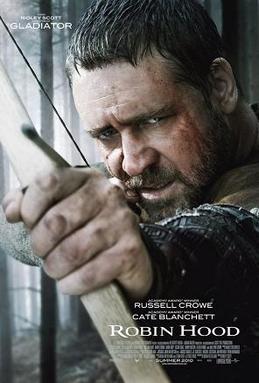
I, for one, am sick of the Robin Hood myth and movies. Or I thought I was. On the latest episode of Mark Kermode’s BBC film review podcast, there’s a fascinating discussion with Russell Crowe and Billy Bragg about the upcoming Ridley Scott film Robin Hood, starring (and co-produced by) Crowe. The new movie is a departure from other versions, with Robin Hood involved in the Magna Carta and also the Forest Charter which, “In contrast to Magna Carta, it provided some real rights, privileges and protections for the common man against the abuses of the encroaching aristocracy.” One line I like from the Forest Charter:

Any archbishop, bishop, earl, or baron who crosses our forest may take one or two beasts by view of the forester, if he is present; if not, let a horn be blown so that this [hunting] may not appear to be carried on furtively.

The discussion about this with Crowe and Bragg (9:00 to about 32:10 of the podcast) goes into how the Norman aristocracy unjustly invaded the land rights of the common people, which was redressed to some degree by the Forest Charter. Sounds interesting.

Robin Hood, Magna Carta, and the Forest Charter Read Post »

Scroll to Top