
In Defense Of Lindsay Lohan

Drug Policy, Pop Culture, Victimless Crimes

Share

Wild child Lindsay Lohan is apparently not a fan of staying out of trouble — nothing but private and public battles with family members, lovers, the media and, lately, the state (see here, here, here, here, here and here). In my opinion, her life is a mess. Yet I must come to her rescue — if only ideologically. You see, LiLo is a victim.

If you thought prohibition was repealed, think again. From minimum drinking age laws to laws that prohibit even parents, in some states, from responsibly introducing alcohol to kids, the state still manages to control not just the alcohol industry but those consuming it. Indeed, if you consume alcohol in places and times that the state deems “illegal,” you will be treated like cattle — literally. Indeed, Lohan has been in the past required to wear an alcohol monitoring bracelet. She has also been required to forcibly attend rehab (let’s see: a chain, involuntary migration — yep, sounds like a form of slavery to me) and comply with various others threats by the state.

The support for the war on drugs is sickening. From what I can tell, almost everyone has been bashing Lohan and praising the judge and the almighty legislation that makes these atrocities happen. Sure, if Lohan committed a real crime against someone else’s property or body, then she’d be guilty. However, the government’s gauntlet was thrown because she had the audacity to say no. There is no obligation to show up in court. LiLo’s record ought to be expunged. Set her free at once.

Repeal the drinking age. Legalize drunk driving. Repeal the war on drugs. Abolish the prisons. Why not repeal the state while we are at it.

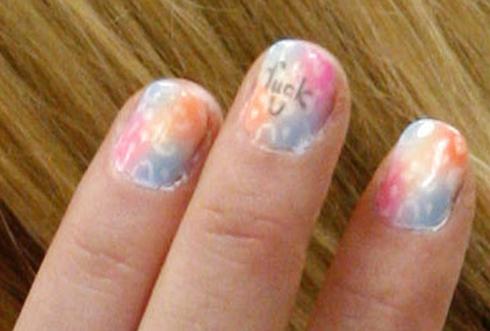
Oh, and regarding the judge who sentenced an innocent person? I agree with Lohan’s sentiments:
In Defense Of Lindsay Lohan Read Post »

Dodge Challenger Freedom Commercial

Protectionism, Taxation
Share

This stupid Dodge commercial–which shows a Dodge Challenger arriving bearing American flags to save the day against the British Redcoats in 1776, ending with the narrator saying “America got two things right: Cars and freedom” is a sad statement about America. We have given up our freedoms and cling to mere words and slogans. We think we are the land of the free, when we have, like the frog in the slowly warming pot of water, allowed the state to ratchet up its depradations of us; and to cheer on, like redneck Wayne’s World rubes when we bomb innocent brown foreigners in the name of “freedom.” In fact, we haven’t gotten freedom or cars right: the former was sacrificed for the sake of the US auto industry in any number of ways–extorted taxes handed over to the auto companies as “bailouts,” protectionism, and the like.

Dodge Challenger Freedom Commercial Read Post »

What Kagan Should Have Said About Natural Rights

Legal System
Share

As noted in this Reason article, Supreme Court nominee Elena Kagan was questioned by a Senator about whether she believes in natural rights that are not provided in the Constitution. She repeatedly refused to grant this, instead insisting: “I don’t have a view of what are natural rights, independent of the Constitution. And my job as a Justice will be to enforce and defend the Constitution and the laws of the United States.”

No doubt she’s going to be taken to task for this by conservatives and libertarian centralists and judicial supremacists. But honestly, do you really want Kagan imposing her own personal view of morality on the country?

I think I agree with her saying her views on natural rights are not relevant. (As an aside: when asked about the Heller case, she responded: “… I accept Heller, which made clear that the Second Amendment conferred that right upon individuals, and not simply collectively.” Notice the word “accept” here: she implies she agrees without saying she agrees. Accepting it means you recognize it was decided and is currently law. It doesn’t mean you agree or that you wouldn’t overturn it.)

Anyway, I think a better answer would be something like this:

Senator, I, like most people, have my own personal views on morals and on what rights people do or should have. But my job as Justice on the Supreme Court is not to impose my personal views. It’s to interpret the Constitution. The Constitution itself, of course, declares and enumerates certain rights. But it is also clear–from the Ninth Amendment and other considerations–that the Framers believed in a certain set of rights retained by the people, including rights not enumerated in the Bill of Rights or elsewhere in the Constitution. So, as Professor Randy Barnett has argued, fidelity to the original understanding of the powers granted by the Constitution to the federal government–and of the rights that limit these powers–requires me, as Justice, to determine what this set of background natural rights comprises, whether it comports with my own personal political ethics or not. It is the natural rights as understood by the founding generation that matters, not as I or others conceive of them today.

Now, if you ask me what this set of the “Framers'” natural rights comprises, I cannot exhaustively say at present. It appears to be open-ended, and requires a great deal of historical research. In a given case, one would have to look into the historical evidence of the understanding of rights as of 1791 to determine if there is a background, unenumerated right that might be relevant to the case at hand. One approach to giving effect to this understanding of the unenumerated rights that the Ninth Amendment contemplates would be to adopt a “presumption of liberty” test as advocated by Professor Barnett, and/or a complementary approach based on the Tenth Amendment in which all federal legislation is scrutinized to determine whether it is specifically authorized in Article I, Section 8 of the Constitution. Under the latter approach, legislation that is not authorized is held unconstitutional, so that this enumerated-powers approach operates similarly to an unenumerated-rights approach, to nullify laws that are not supported by an enumerated power (or that contravene an unenumerated right, which is often the same thing, as the very purpose of the enumerated powers approach was to limited federal power so as to protect both enumerated and unenumerated rights).

What Kagan Should Have Said About Natural Rights Read Post »

The National Intellectual Property Rights Coordination Center is Here to Help

IP Law, Police Statism
Share

Elizabeth Higgs passed this image on to me–she was alerted to this by a European friend who used a site called TV Shack to watch American TV and found the image above. The center seal, from the National Intellectual Property Rights Coordination Center, is creepy and  fascist-looking. And no wonder–the NIPRCC is a program of U.S. Immigration and Customs Enforcement (ICE), which is itself the largest investigative arm of the Department of Homeland Security. This was apparently part of a crackdown by ICE that seized domains from nine websites engaged in the “criminal theft of American movies and television.” “Officials also seized assets from 15 bank, investment and advertising accounts and executed residential search warrants in North Carolina, New York, New Jersey and Washington….”

The DHS–protecting us from terrorism… and copyright infringement! Notice to all foreign nations who don’t crack down hard enough on patent and copyright infringement: you’re either with us, or you’re agin’ us!

The National Intellectual Property Rights Coordination Center is Here to Help Read Post »

Scroll to Top