The Perils of Centralized Innovation

(Austrian) Economics, Business, Corporatism, Technology
Share

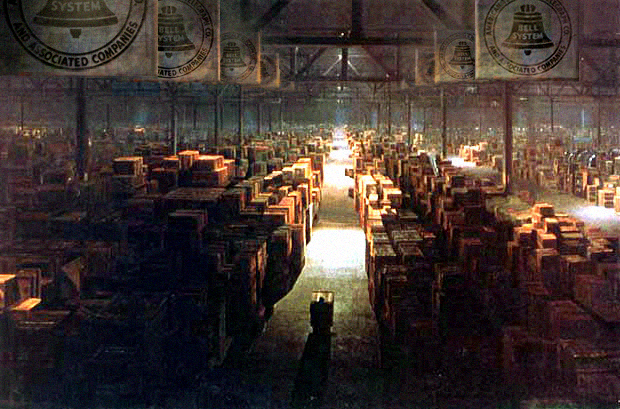
Gizmodo has an interesting post about How Ma Bell Shelved the Future for 60 Years. It is an excerpt from The Master Switch by Tim Wu.

Here is the money quote:

This is the essential weakness of a centralized approach to innovation: the notion that it can be a planned and systematic process, best directed by a kind of central intelligence; that it is simply of matter of assembling all the best minds and putting them to work in unison. Were it so, the future could be planned and executed in a scientific manner.

Yes, Bell Labs was great. But AT&T, as an innovator, bore a serious genetic flaw: it could not originate technologies that might, by the remotest possibility, threaten the Bell system. In the language of innovation theory, the output of the Bell Labs was practically restricted to sustaining inventions; disruptive technologies, those that might even cast a shadow of uncertainty over the business model, were simply out of the question.

~*~

Cross-posted at Prometheus Unbound.

The Perils of Centralized Innovation Read Post »

Pundits: Play Whack-A-Mole with WikiLeaks. Oh wait…

Anti-Statism, Imperialism, Police Statism, Technology, War
Share

In How to Mirror a Censored WordPress Blog, I discussed how the Mises Institute open-sourcing all of Mises.org and putting its entire literature and media library online as a set of torrents will help ensure the continued existence of this treasure trove of liberty in the event of a natural disaster or a future crackdown by the US government.

Here’s a practical example taking place before us. Some technologically and strategically-incompetent pundits are clamoring for the United States federal government to use its cyber capabilities to take out WikiLeaks before the organization puts online the remaining 15,000 documents of the leaked Afghan war logs.

Kevin Poulsen of Wired.com explains how a previous attempt to take down wikileaks.org has already failed in the past and how future attempts to take out WikiLeaks will fail as well.

In 2008, federal judge Jeffrey White in San Francisco ordered the WikiLeaks.org domain name seized as part of a lawsuit filed by Julius Baer Bank and Trust, a Swiss bank that suffered a leak of some of its internal documents. Two weeks later the judge admitted he’d acted hastily, and he had the site restored. “There are serious questions of prior restraint, possible violations of the First Amendment,” he said.

Even while the order was in effect, WikiLeaks lived on: supporters and free speech advocates distributed the internet IP address of the site, so it could be reached directly. Mirrors of the site were unaffected by the court order, and a copy of the entire WikiLeaks archive of leaked documents circulated freely on the Pirate Bay.

The U.S. government has other, less legal, options, of course — the “cyber” capabilities Thiessen alludes to. The Pentagon probably has the ability to launch distributed denial-of-service attacks against WikiLeaks’ public-facing servers. If it doesn’t, the Army could rent a formidable botnet from Russian hackers for less than the cost of a Humvee.

But that wouldn’t do much good either. WikiLeaks wrote its own insurance policy two weeks ago, when it posted a 1.4 GB file called insurance.aes256.

The file’s contents are encrypted, so there’s no way to know what’s in it. But, as we’ve previously reported, it’s more than 19 times the size of the Afghan war log — large enough to contain the entire Afghan database, as well as the other, larger classified databases said to be in WikiLeaks’ possession. Accused Army leaker Bradley Manning claimed to have provided WikiLeaks with a log of events in the Iraq war containing 500,000 entries from 2004 through 2009, as well as a database of 260,000 State Department cables to and from diplomatic posts around the globe.

Whatever the insurance file contains, Assange — appearing via Skype on a panel at the Frontline Club — reminded everyone Thursday that he could make it public at any time. “All we have to do is release the password to that material and it’s instantly available,” he said.

WikiLeaks is encouraging supporters to download the insurance file through the BitTorrent site The Pirate Bay. “Keep it safe,” reads a message greeting visitors to the WikiLeaks chat room. After two weeks, the insurance file is doubtless in the hands of thousands, if not tens of thousands, of netizens already.

We dipped into the torrent Friday to get a sense of WikiLeaks’ support in that effort. In a few minutes of downloading, we pulled bits and piece of insurance.aes256 from 61 seeders around the world. We ran the IP addresses through a geolocation service and turned it into a KML file to produce the Google Map at the top of this page [go to the Wired.com article or view it on Google Maps — GAP]. The seeders are everywhere, from the U.S., to Iceland, Australia, Canada and Europe. They had all already grabbed the entire file, and are now just donating bandwidth to help WikiLeaks survive.

Cross-posted at Is-Ought GAP.

Pundits: Play Whack-A-Mole with WikiLeaks. Oh wait… Read Post »

Denver police officer assaults man for talking on phone

Police Statism, Technology, Victimless Crimes
Share

The brutality exhibited by the police in this video is so unwarranted, so vicious, and so totally despicable, that not even the usual “defend-the-police-no-matter-what” automatons are putting up a fight in the comments section. Of course, the “Safety Manager” maintains that the fine officer who obviously assaults a man for absolutely nothing, deserves to keep his job.

Before the video was discovered, the police officer simply made up a story that the assaulted bystander was trying to strike the police officer. The DPD, however, believes that police who lie and attack the public unprovoked should be kept on the force. Your tax dollars at work.

Note also how the video camera, being operated by a police force employee, immediately pans away from the action after it becomes apparent that excessive force is being used.

Denver police officer assaults man for talking on phone Read Post »

All Your Tubes Are Belong to Googlizon

(Austrian) Economics, Business, Corporatism, Democracy, Nanny Statism, Technology, Vulgar Politics
Share

Googlizon with Chrome eye beam What you say!!!1

There has been a lot wailing and gnashing of teeth recently over a joint announcement by Google and Verizon of a legislative-framework proposal they’ve been working on.

Now, I’ve seen this variously referred to as a backroom deal or pact, a secret treaty, or a set of regulations Google and Verizon are imposing on the internet. The FCC is shamefully abdicating its responsibility to regulate the internet! Nevermind that the D.C. Circuit court determined recently in the Comcast case that the FCC has no such regulatory authority over broadband internet; hence, the calls to disastrously reclassify broadband internet access in order to place it under the same regulatory rules as regular telephone service. Some are even intimating that Google and Verizon are trying to “own” the internet. Net neutrality activists are up in arms about this proposal, viciously attacking Google for selling out and reversing its longstanding defense of net neutrality, and calling for people to stage a silly boycott of Google products and services. If you don’t join the herd, you get labeled a Google-Verizon apologist or it is insinuated that you are on their payroll (see comments on the CNET articles linked below, for example).

So what should libertarians make of all this?


  1. Confused by this sentence and the title? The title is a mash-up of a few geeky internet memes. Know your meme, and also check out this Wikipedia article and this YouTube video

All Your Tubes Are Belong to Googlizon Read Post »

Greedy Businessman Does More For Environment Than Environmentalists

(Austrian) Economics, Business, Environment, Technology
Share

Over at Forbes.com, Reihan Salam had something rather unexpected but very welcome to say about the CEO of a major corporation:

That the success of the Kindle is good news for Amazon should go without saying. But it represents a remarkable environmental advance as well. The publishing industry in the U.S. felled roughly 125 million trees and generated vast amounts of wastewater. And, of course, physical books have to be transported by trucks, which generate carbon emissions, exacerbate congestion, increase traffic fatalities and cause wear-and-tear on already overburdened roads. One assumes that Bezos didn’t have the environment foremost in mind when he pushed the Kindle concept forward, yet he’s arguably done more to fight climate change by threatening hardcovers and paperbacks with extinction than any number of environmental activists.

Salam goes on to argue that Amazon will ‘win the internet’ through the Kindle and its rapidly growing ebook sales. I don’t know about that. What does it mean to ‘win the internet’? He only considers Facebook as a rival. What about Google? Android and ChromeOS are poised to dominate the mobile phone and tablet pc markets, putting Google into direct competition with the Kindle. Then there’s Google Search, Books, Voice, Gmail, Docs, Maps, Chrome browser, TV, and so on and so forth.

But bravo to Salam for daring to recognize in public the (probably unintended) positive environmental externalities of business decisions and technological innovation driven by profit-seeking amidst market competition — indeed, for daring to rank them on par with or above that of ‘altruistic’ environmental activists.

Cross-posted at Is-Ought GAP.

Greedy Businessman Does More For Environment Than Environmentalists Read Post »

Scroll to Top