because according to this quote cited by Gregory Benford in his happy-birthday letter in Locus Magazine (January 2008), he claims that “there are some general laws governing scientific extrapolation, as there are not (pace Marx) in the case of politics and economics.” Well, far be it from me to disagree that Marx was wrong about a lot of things, but Clarke is wrong here. Sir Clarke, you may be 90 years old now, and happy birthday by the way, but it’s never too late to acquire a firm grasp of sound economic theory.
As disappointing as it is, it’s not surprising that he had a natural-scientistic bias against economics. Sadly, he died only a few months after my post.
While researching for this article I came across a searing indictment by Clarke on the American capitalist system. After observing that the structure of American society may be unfitted for the effort that the conquest of space demands he continued, “No nation can afford to divert its ablest men into essentially non-creative and occasionally parasitic occupations such as law, insurance and banking”. He also referred to a photograph in Life Magazine showing 7,000 engineers massed behind a new model car they had produced as ‘a horrifying social document’. He was appalled by the squandering of technical manpower it represented. All this indeed makes one wonder whether he really was a closet socialist.
Aside from his legacy as one of the giants of the Austrian school and modern anarcho-capitalism, Murray Rothbard was for a time a political activist, one of the founding members of the Libertarian Party, which got its start in the basement of David Nolan’s home some 40 years ago. Rothbard’s radicalism kept the LP honest for a time, but eventually it began to behave like most other third parties, softening its principles to make its platform more appealing. Eventually Rothbard, following a split with “low tax liberals” such as Ed Crane (founder of the Cato Institute) and David Koch (a Cato benefactor), left the LP, and took with him most of its radical heart.
No doubt Rothbard would be doing barrel rolls in his grave to see what’s become of the LP lately. The most recent candidates for the party’s Presidential nomination, Bob Barr and Wayne Allyn Root, both former Republicans, have been hard at work promoting not so much personal liberty but the kinder, gentler sides of former and current members of the U. S.’s stable of tinpot dictators.
Speaking to CNN’s Fredricka Whitfield, Barr did his best to defend his client’s tainted legacy, noting that, while Duvalier “is very well aware of the personal risk that he faced coming back to Haiti,” that “paled in comparison to the needs of his people.” Barr was tight-lipped about the details of Duvalier’s return and what he wanted to accomplish, other than to say that he wanted to “see funds made available to help the relief effort which, by any reasonable estimate here, has not progressed well.”
Then Whitfield hit Barr with a tough question on his integrity: after all the American government had done to clean up Duvalier’s mess, as a former Congressman, did he see any conflict of interest? Barr seemed to take offense, arguing that the American government had not helped much and, that, in fact, “the country is in worse shape now than it was at the time Mr. Duvalier was president.”
AP/file
Well, at least Barr isn’t representing the LP in his capacity as Baby Doc’s defender. I wish the same could be said of Root’s mash note for Egypt’s embattled president Hosni Mubarak, which was not only written by a sitting LP committee chair but was published on the party Web site:
I just got off the phone with a longtime friend- a successful Egyptian business leader. He believes that several hundred thousand people in the streets do not represent the 80 million citizens of Egypt. They represent anarchists, communists, and Islamic extremists- all with an agenda and axe to grind. He says if you polled the people of Egypt today, the majority would support Mubarak. He says that the backbone of Egypt- the business owners, small business community, and middle class still support Mubarak and the military. They are horrified by the mobs in the street and are shocked at Obama’s tepid response to the riots and the one-sided portrayal of the situation by the U.S. media.
It is shameful that the party of Nolan and Rothbard has become the party of apologists for dictators, but I can take comfort in knowing that as the Libertarian Party’s radical core has dwindled to nothing, so too has its relevancy to libertarianism in general.
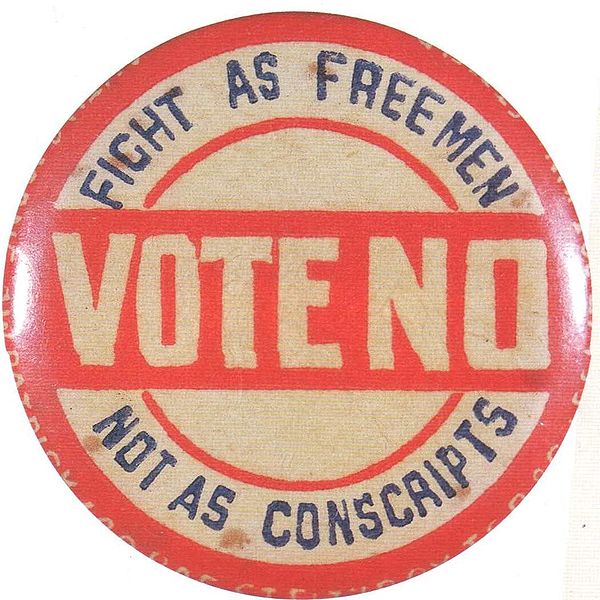
A few decades ago, the draft was a requirement for any major military undertaking. No one would have dreamed of fighting the Germans and Japanese, or the North Koreans and Chinese, without calling up young men for mandatory service. Not until the waning years of the Vietnam War did the nation elect to rely entirely on volunteers.
It was a controversial step, and one whose durability was very much in doubt. But in the intervening decades, the draft has gone from being indispensable to being unthinkable. Even the extraordinary demands of two difficult wars have not induced a reconsideration.
Even the military’s leadership recognizes now that armies perform better when they’re filled with people who actually want to be there, and as Chapman points out, it’s a more efficient use of training dollars to spend them on Army careerists than on guys who’d rather be smoking pot and watching football.
If this is the extent of Chapman’s argument then I agree, but I’m not any more comforted by the fact that the military’s bombing and killing of poor people overseas are performed by people who actually want to do that sort of thing. And he ignores the fact that young men must still notify the government of their whereabouts via Selective Service in case the draft is reinstated. If the military really does not want conscripted men (and possibly women) among its ranks, why does the infrastructure for conscription still exist?
More dubious is Chapman’s concluding paragraph:
It was once a novel experiment: fielding a force to protect freedom without grossly violating freedom by dragooning young men to serve. But it’s worked so well we’ve almost forgotten there’s an alternative.
“Protect freedom” is a canard I expect from National Review, not a supposedly libertarian publication such as Reason. Few if any all-volunteer forces have ever been used to protect Americans’ freedoms, even during the Revolutionary War (see volume 4 of Murray Rothbard’s Conceived in Liberty); and there isn’t a single military campaign undertaken in the past century that could be called a legitimate defense of freedom. If one wishes to sing the praises of America’s efficient, all-volunteer killers, at least one shouldn’t pretend they exist for any reason other than to satisfy the imperialist aims of the Washington elite.
In a previous post, Voting, Moral Hazard, and Like Buttons, I discussed the moral hazards of voting and why democracy does not legitimize the state or protect our liberty. I also discussed how statist democracy, particularly representative democracy, is manipulative and conducive to top-down central planning of society. (Statist) politics tends to reduce all basic social issues to problems requiring administrative manipulation. In this post, I’m going to delve into this issue further and draw upon insights by Hannah Arendt in The Human Condition1 to illustrate how (statist) politics is inherently an attempt to run society as one massive organization, organism, or machine.
Hannah Arendt’s analysis of the differences between action (praxis)2 and work – and between politics, which involves action, and fabrication or making (poi?sis), which involves work – has negative implications for the central planning of society that is characteristic of modern representative-democratic states. In particular, I have in mind her criticism of Plato, and to a lesser extent Aristotle, regarding their tendency to view society as a sort of organization and politics as the running of society as such an organization – or, in their words, politics as akin to household management. This fits with the tendency in many cultures to refer to one’s country as “the Fatherland” or “the Motherland” and with socialists and communitarians (on the left and the right) essentially modeling their ideal society after the family.