
The Death Throes of Pro-IP Libertarianism

IP Law, Libertarian Theory
Share

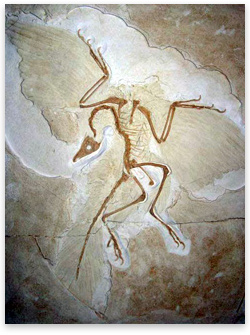
death throes of an archaeopteryxMy article, “The Death Throes of Pro-IP Libertarianism,” was published on Mises Daily today. Also published today on Mises Daily is a reprint of Wendy McElroy’s great, classic “Copyright and Patent in Benjamin Tucker’s Periodical Liberty.”

Updates:

Amusing: on the “Christian Pipe Smokers” site (hunh?), one guy links to my article and says “This is so beautifully written I had to share it.” Another replies: “Okay to be nice I started reading it. I got half way and wanted to blow my brains out. That was stupidly and poorly written. After getting half way I was lost having no idea what he was talking about. … If yer reading crap like this all the time it is no wonder your politics are screwed up.”

Also, mentioned in Where should anarchists stand on IP? (FreeDissent); my comment was:

Thanks for the plug, but correct, I don’t regard myself as a right-libertarian. I despise the right, and also the left. We libertarians are neither right nor left.

I’m nonreligious, pro-gay-marriage, pro-open-borders, pro-tolerance/cosmopolitan values, pro-drug legalization, anti-state, anti-war, and anti-IP. And I even like chardonnay. I am not sure how that makes me “right.” I doubt they would have me.

Also discussed on Freesteader.

And in an excellent post, The Decline of the Randian Influence on American Libertarianism?

The Death Throes of Pro-IP Libertarianism Read Post »

New Copyright Rules Released

IP Law
Share

Intellectual property, especially copyright and patents, is purely fictitious, a construction of the State. Stephan Kinsella has definitively proved such in his paper Against Intellectual Property.

Nevertheless, the US government continues to prop up this inefficient and unethical practice. Under the Digital Millennium Copyright Act, many lives have been ruined by the bad side of corps, full of lawyers hunting for cash. We all know of the old ladies and teenagers who receive verdicts requiring them to pay obscene amounts of money for such non-crimes.

Well, some new rules coming straight from the Library of Congress are sure to help alleviate a few of these problems. Essentially, the Librarian of Congress must evaluate exemptions to the DMCA every 3 years, i.e. you cannot be prosecuted, period, if you do these things. Previously, there had only been one exemption recognized. Now, there are SIX exemptions, and the first three are quite significant.

The basics of each exemption:
1) You can rip your own DVDs. You can remix scenes for noncommercial use. So all those Hitler-plus-caption remixes from the movie Downfall no longer can be taken down. Teachers who want to use a movie in a class can rip it. No one from the DMCA can touch you.
2) You can jailbreak your phone, nobody can prosecute you. Big swipe at Apple/AT&T.
3) You can use software to unlock your phone for use on a different network.
4) You can use software to crack game SecuROMs or other game DRM for the purpose of “investigation” or research. The language is very broad, since even curiosity can prompt “investigation.”
5) You can use cracks to bypass a hardware dongle. This is significant for people like me who use lab equipment or any variety of peripherals with stupid dongles.
6) You can crack DRM encrypted ebooks to use text-to-speech capabilities. Convenient.

Gizmodo has a more thorough analysis here.

These new rules surely do not go far enough, but thankfully things are not becoming more restrictive in this arena. But we need to continue pushing back, so keep spreading the word!

Cross-posted at LibertarianChristians.com.

New Copyright Rules Released Read Post »

Intellectual Thievery

IP Law, Science
Share

Statism + legislation = destruction and unintended consequences:

… Jon “Maddog” Hall wanted to try to preserve some deteriorating piano rolls, but discovered (much to his annoyance) that copyright may be getting in the way. He points out that many old player piano rolls are deteriorating, and the small group of remaining collectors are hoping to preserve the music by digitizing them. Easier said than done… turns out that Hall got confused about the difference between the copyright on the composition and the copyright on the performance, and his attempt to save a more modern recording of a public domain song — even though that piano roll was deteriorating — was not allowed. After contacting one company that still makes piano rolls, he was told that he was better off not preserving the rolls in his collection:

We ended up agreeing that if I made an mp3 recording of less than 30 seconds, off an old roll, from a company that was completely out of business, kept it completely for my own use and locked up so no one else could hear it, that I probably would not be sued. He also begged me not to use any of his company rolls in this task, as he really did not want to have to sue me. I thanked him for his time.

It only took 100 years, but it looks like copyright law in the US is finally doing what it originally intended to do: destroying piano rolls.

Intellectual property legislation is outright theft. A judge could one day order a famine by declaring certain farming methods and genetic patterns to be “owned” by someone else (probably some corporatist entity backed by the full “faith and credit” of the US–that is, anything from machine guns to nukes.) Great!

Intellectual Thievery Read Post »

IP, Black Markets, Praxeology & Violence

(Austrian) Economics, IP Law, Libertarian Theory, Technology, Victimless Crimes
Share

Mises.org has recently published an article that I co-wrote with Daniel Coleman where we attempt to answer why unlike every other black market, “info-trafficking” remains peaceful:

Unlike most black markets, the black market for information is characterized by peace and stability. There is a near-perfect harmony between the supply and the demand for movies, music, songs, and other digital content that falls under the control of intellectual-property legislation.

In the market for information, we do not see the kinds of conflicts that are rampant in other black markets. There are no turf wars between gangs for the right to offer the latest pop hit or blockbuster movie; there are no robberies committed by would-be users who need the money to get their fix. The vast majority of copyright violators go about their business without harming anyone.

In fact, those who upload, host, and share illegal content are not in any significant danger at all. What sets the black market in information apart from other black markets? Why is it nonviolent?

Enjoy the article.

IP, Black Markets, Praxeology & Violence Read Post »

Intellectual Property: A Simple Example

IP Law
Share

Patents are voicing an idea and then telling everyone else they can’t use that idea without licensing it. For example, I might find a better way to fish and then prevent anyone who saw me use that new technique from employing it themselves. The fact that I had a new idea doesn’t give me the right to prevent others from arranging their property in the configuration they desire.

Intellectual Property: A Simple Example Read Post »

Scroll to Top