Reader Ryan reminded us that not everyone who happens upon The Libertarian Standard will know what Austrian Economics is. Since an understanding of sound economics is so important to understanding the case for liberty, and Austrian Economics just is sound economics, we decided to make this the first question-and-answer for our Q&A series and the first addition to our Libertarian FAQ. Remember, you too can submit questions to us that you would like us to answer, if not for yourself then for the benefit of others. Inspire us!
What is Austrian Economics?
Austrian Economics is paradigm, a way of analyzing economic and social phenomena that is sometimes completely at odds with the “mainstream” of Economics both in academe and among the ruling elites. AE is centered in the acting human being and thus follows a strict causal-realist that -claim its enthusiasts- render a far deeper and truer comprehension of what goes on in human societies.
This tradition or school of thought is the culmination of centuries and perhaps even millenia of (European) continental subjectivist notions that can be traced back to the ancient Greeks and all the way through Roman thinkers, Medievalists, Renaissance and finally modern authors. What makes it distinctive is the focus on human action rather than in objective (materialistic), aggregated additions and substractions of actors and goods (viewing the forest but losing sight of the trees or ignoring them altogether) as well as idealized mathematical and geometrical models (in a supposed desired to seem “more scientific” that otherwise).
The Austrian School’s founder, Carl Menger, wrote his “Principles of Political Economy” as a structured marginalist1 answer to the Methodenstreit (a debate on method) that he was having with the German historicists, who claimed that there are no economic (reality) laws but rather recipes that may or not work depending of time and place. His successor, Eugen von Böhm-Bawerk, used the same marginalist approach to explain capital, savings, investment, interest and time preference. His contenders of the time were the Marxists but also the clearly stuck “Classical” economists of the British islands who were making mistakes as grave as to have engendered -at least partially- the bases for Marxism and Keynesianism. Böhm-Bawerk’s most brilliant student was Ludwig von Mises, considered by many as the best economist ever. Mises predicted as early as in 1921 that socialism was an untenable ideas because it kills the possibility of economic calculation (the final products being more than the intermediate goods and other things spent used to make them) and thus renders the whole of society (qua division of labor) a chaotic and inharmonious cluster of errors.
Mises also demonstrated that economic booms and busts are caused by an easy credit (no previous savings backing it up) policy mainly coming from States. Finally Mises demonstrated the universal character of economic laws as features of human action thus recouperating Economics from the relativistic pitfalls of empirism and historicism once again popular in his time. Mises’ most famous student, Friedrich A. von Hayek was awarded a Nobel Prize in Economics in 1974 in big part due to this work with Mises on the direct threat that Intervencionism and Inflationism pose for free societies. The Austrian School found a Misesian revival after Hayek abandoned Economics to pursue other intellectual interests under the influence of Karl Popper and others, when Murray N. Rothbard wrote his treatise “Man, Economy and State”. Rothbard went beyond his teacher not only on strict Economics matters such as monopoly or Interventionism but mainly he set a foundation of Ethics that would resist any utilitarian attempt to seek anything but freedom because of special considerations of any kind. Other students of Mises that need mention are Hans Sennholz, a prolific writer on the subjects of money and inflation; Henry Hazlitt -the NYTimes Economics editor- who although wasn’t a student of Mises personally, was tremendously influenced by him; Israel Kirzner from NYU, with a clear Hayekian strand of analysis of entrepreneurship and coordination, Ralph Raico a revisionist historian of prime qualities and George Reisman, whose attempts at an Austrian + Classical synthesis are controversial but very interesting nonetheless.
Currently the hotbead of Austrian Economics is Auburn, Alabama where Llewellyn Rockwell Jr. setup the “Ludwig von Mises” Institute to help spread the Misesian-Rothbardian strand of AE. Scholars close to or directly working with the LVMI are prof. Hans-Hermann Hoppe, a radical and pathbreaking thinker, prof. Jörg Guido-Hülsmann who has made original contributions to several subjects including the Ethics of money production, profs. Joseph Salerno, Peter Klein, Walter Block and Thomas Dilorenzo. Today www.mises.org is a world famous source of economic education in the causal-realist paradigm and is in no small part responsible for the revival of AE and its arrival to countries such as Ecuador, Brazil, Spain, Sweden and Chzech Republic among dozens others that are seeing the formation of Misesian centers for thought and education in the tradition of the Austrian School.

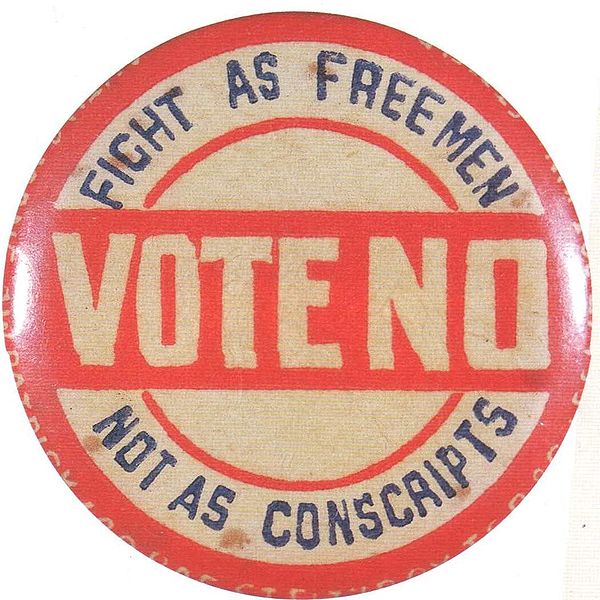 Even the military’s leadership recognizes now that armies perform better when they’re filled with people who actually want to be there, and as Chapman points out, it’s a more efficient use of training dollars to spend them on Army careerists than on guys who’d rather be smoking pot and watching football.