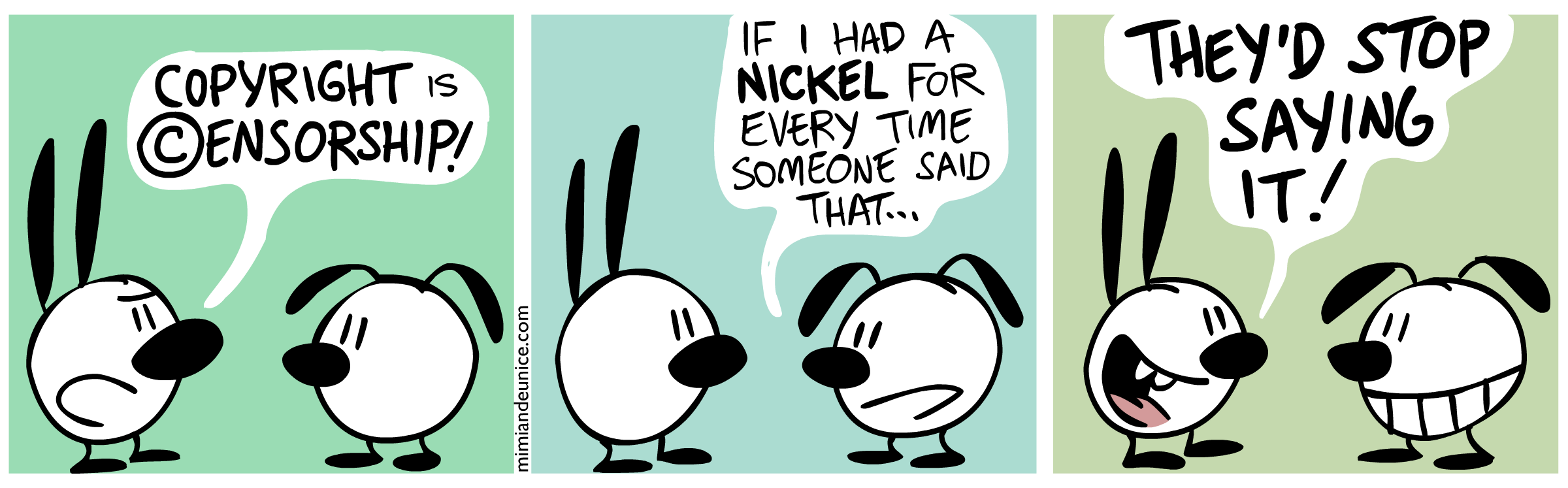
Carrier IQ’s attempt to employ copyright censorship backfires

Business, IP Law, Podcasts, Technology
Share

As discussed in the Techcrunch post Android Researcher Hit With C&D After Dissecting Monitoring Software, Android security researcher Trevor Eckhart posted about the mobile tracking software from a company called Carrier IQ. As explained in the Techcrunch post:

Carrier IQ pitches themselves as the “leading provider of mobile service intelligence solutions,” and provides their services to a number of players in the mobile space. The company’s main U.S. carrier partner is Sprint, and Eckhart claims that their tracking software appears on Android devices from HTC and Samsung among others.

According to Eckhart’s research, Carrier IQ is capable of monitoring everything from where the phone is to what apps are installed, and even which keys are being pressed. Carrier IQ says that the information is collected to give carriers insight into how the mobile use experience can be improved. It sounds like a noble enough goal, except Eckhart found that the software could run without the user’s knowledge or consent as was the case with the HTC phones he tested.

Carrier IQ’s general counsel then fired off a vicious cease-and-desist letter [PDF] against Eckhart, “claiming that he committed copyright infringement by reproducing some of the company’s training materials in his post and that he made ‘false allegations’ about the nature of their software.” In other words, Carrier IQ was trying to squelch criticism of it by using copyright law to censor its critic. These tactics are one reason I not only despise copyright, but that I have begun to really detest what the legal profession has become: a bunch of arrogant bullies. The C&D letter is outrageous: it gave Eckhart two days to commit to all kinds of groveling, making a public apology, replacing his original blog post with one written by Carrier IQ, and so on. While threatening him with tens of thousands of dollars of damages, if not more, with some dubious claims, as discussed in a recent episode of This Week in Law. For example, according to some of the legal pundits on TWiL, the statutory damages and attorneys’ fees threatened are available only for a registered copyright work, and the material in question did not appear to have been registered. Further, Ekhard would probably have a fair use defense (as the Electronic Frontier Foundation (EFF) argues as well).

In any case, after its threats was noticed and blogged and tweeted about on the Internet, and after Eckhart bravely contacted the EFF for help instead of backing down, Carrier IQ realized what a PR disaster its threats had created, and their CEO retracted their C&D and publicly apologized to the developer. (See Techcrunch’s post Carrier IQ Retracts Their C&D, Apologizes To The Android Researcher They Hassled.) From the release:

As, of today, we are withdrawing our cease and desist letter to Mr. Trevor Eckhart. We have reached out to Mr. Eckhart and the Electronic Frontier Foundation (EFF) to apologize. Our action was misguided and we are deeply sorry for any concern or trouble that our letter may have caused Mr. Eckhart. We sincerely appreciate and respect EFF’s work on his behalf, and share their commitment to protecting free speech in a rapidly changing technological world.

The full text of the release is below. The EFF was truly heroic here (see Eckhart’s post Why I love the EFF; and EFF’s post Carrier IQ Tries to Censor Research With Baseless Legal Threat).

[c4sif]

Carrier IQ’s attempt to employ copyright censorship backfires Read Post »

Down with Gatekeepers: Hillary Clinton and the Obama Administration vs. Internet Freedom

Anti-Statism, Corporatism, Education, IP Law, Police Statism, Technology, Totalitarianism
Share

Last year, in Hillary Clinton’s Historic Speech on Global Internet Freedom, Adam Thierer praised Hillary Clinton for a speech drawing

a bold line in the cyber-sand regarding exactly where the United States stands on global online freedom. Clinton’s answer was unequivocal: “Both the American people and nations that censor the Internet should understand that our government is committed to helping promote Internet freedom.” “The Internet can serve as a great equalizer,” she argued. “By providing people with access to knowledge and potential markets, networks can create opportunities where none exist.”

But of course this is a complete sham. The fedgov and the Obama administration may not like it when other oppressive regimes restrict their own subjects’ access to technology, when this is contrary the American state’s geopolitical “interests,” but the cekatS1 is not at all in favor of Internet freedom. Witness the relentless push to keep increasing copyright law and its insidious effect on Internet freedom. Thus, Obama signed the horrible ACTA (probably unconstitutionally),2 and his administration is also: using other trade agreements to export the draconian DMCA-type copyright provisions to other countries;3 and has proposed to expand “tough” enforcement of copyright, including wiretaps4 and other legislation to curb “piracy” on the Internet.5 And it’s why

U.S. Copyright Czar and Obama administration officials secretly cooperate with Hollywood, recording industry and ISPs to disrupt internet access for users suspected of violating copyright law … Obama administration’s cozy relationship with Hollywood and the music industry’s lobbying arms and its early support for the copyright-violation crackdown system publicly announced in July.6

And it’s why we have the looming threat of SOPA,7 which endangers Internet freedom, which, as I’ve noted before, is one of the most important tools available in the fight against the state.8  And it’s why the cekatS wants to control and restrict it. And it’s doing so, cleverly if perversely, in the name of (intellectual) “property rights” and fighting “piracy”. And who can doubt Obama will sign SOPA if Congress puts it on his desk? (Even though Vice-Thug and IP Poobah Biden hypocritcally spoke out against SOPA type provisions recently.)

And it’s why the Obama administration has seized websites to censor Wikileaks. And ICE has seized hundreds of domains in the name of stopping piracy and at the behest of the MPAA, in addition to other ICE domain seizures in the name of stopping child pornography (“Operation Protect Our Children“–What do you mean “our,” kemosabe?).

No one can seriously think that the central state, or the Obama administration, is in favor of Internet freedom.

As for Hillary Clinton’s lies and claims to be for global Internet freedom despite being part of an administration hell bent on destroying it, her true views were revealed long ago, in 1998 in the wake of the Drudge Report breaking the Bill Clinton-Monica Lewinsky scandal, in response to a question by reporters  Hillary Clinton was asked by reporters whether she favored curbs on the Internet. Her response:
We’re all going to have to rethink how we deal with the Internet. As exciting as these new developments are, there are a number of serious issues without any kind of editing function or gatekeeping function9 And, as Thierer notes in his piece, Hillary Clinton also said “We are all going to have to rethink how we deal with [the Internet], because there are all these competing values. Without any kind of editing function or gatekeeping function, what does it mean to have the right to defend your reputation?” Note here how IP (reputation rights are a type of IP) is once more at the root of the threat to the Internet (one reason I have concluded that copyright is even worse than patent). Of course the political elites–the real 1%–and the Big Media they are in cahoots with, hate the lack of the official “gatekeeper” function. They hate the Internet, social media, talk radio, podcasting, cell phones, twitter, and video cameras.

Update: see Democrats and “Internet Freedom”.


  1. Bill Stepp’s acronymous term for the state: cekatS = “criminal entity known as the State.” Other funny ones are “conjob” for Constitution, and “crookopolies” for monopolies. 

  2. ACTA, Executive Agreements, and the Bricker Amendment

  3. Free-trade pacts export U.S. copyright controls

  4. Copyright Enforcement, Now Featuring Wiretaps! 

  5. White House will propose new digital copyright laws

  6. Wired article, U.S. Copyright Czar Cozied Up to Content Industry, E-Mails Show

  7. Die, SOPA, Die

  8. The Ominous PROTECT IP Act and the End of Internet Freedom; Patent vs. Copyright: Which is Worse?; Internet Access as a Human Right

  9. Quoted in Government Gatekeepers Come After the Internet; see also No Gatekeepers; Hillary Clinton Doesn’t Understand The Constitution

Down with Gatekeepers: Hillary Clinton and the Obama Administration vs. Internet Freedom Read Post »

Pundits: Play Whack-A-Mole with WikiLeaks. Oh wait…

Anti-Statism, Imperialism, Police Statism, Technology, War
Share

In How to Mirror a Censored WordPress Blog, I discussed how the Mises Institute open-sourcing all of Mises.org and putting its entire literature and media library online as a set of torrents will help ensure the continued existence of this treasure trove of liberty in the event of a natural disaster or a future crackdown by the US government.

Here’s a practical example taking place before us. Some technologically and strategically-incompetent pundits are clamoring for the United States federal government to use its cyber capabilities to take out WikiLeaks before the organization puts online the remaining 15,000 documents of the leaked Afghan war logs.

Kevin Poulsen of Wired.com explains how a previous attempt to take down wikileaks.org has already failed in the past and how future attempts to take out WikiLeaks will fail as well.

In 2008, federal judge Jeffrey White in San Francisco ordered the WikiLeaks.org domain name seized as part of a lawsuit filed by Julius Baer Bank and Trust, a Swiss bank that suffered a leak of some of its internal documents. Two weeks later the judge admitted he’d acted hastily, and he had the site restored. “There are serious questions of prior restraint, possible violations of the First Amendment,” he said.

Even while the order was in effect, WikiLeaks lived on: supporters and free speech advocates distributed the internet IP address of the site, so it could be reached directly. Mirrors of the site were unaffected by the court order, and a copy of the entire WikiLeaks archive of leaked documents circulated freely on the Pirate Bay.

The U.S. government has other, less legal, options, of course — the “cyber” capabilities Thiessen alludes to. The Pentagon probably has the ability to launch distributed denial-of-service attacks against WikiLeaks’ public-facing servers. If it doesn’t, the Army could rent a formidable botnet from Russian hackers for less than the cost of a Humvee.

But that wouldn’t do much good either. WikiLeaks wrote its own insurance policy two weeks ago, when it posted a 1.4 GB file called insurance.aes256.

The file’s contents are encrypted, so there’s no way to know what’s in it. But, as we’ve previously reported, it’s more than 19 times the size of the Afghan war log — large enough to contain the entire Afghan database, as well as the other, larger classified databases said to be in WikiLeaks’ possession. Accused Army leaker Bradley Manning claimed to have provided WikiLeaks with a log of events in the Iraq war containing 500,000 entries from 2004 through 2009, as well as a database of 260,000 State Department cables to and from diplomatic posts around the globe.

Whatever the insurance file contains, Assange — appearing via Skype on a panel at the Frontline Club — reminded everyone Thursday that he could make it public at any time. “All we have to do is release the password to that material and it’s instantly available,” he said.

WikiLeaks is encouraging supporters to download the insurance file through the BitTorrent site The Pirate Bay. “Keep it safe,” reads a message greeting visitors to the WikiLeaks chat room. After two weeks, the insurance file is doubtless in the hands of thousands, if not tens of thousands, of netizens already.

We dipped into the torrent Friday to get a sense of WikiLeaks’ support in that effort. In a few minutes of downloading, we pulled bits and piece of insurance.aes256 from 61 seeders around the world. We ran the IP addresses through a geolocation service and turned it into a KML file to produce the Google Map at the top of this page [go to the Wired.com article or view it on Google Maps — GAP]. The seeders are everywhere, from the U.S., to Iceland, Australia, Canada and Europe. They had all already grabbed the entire file, and are now just donating bandwidth to help WikiLeaks survive.

Cross-posted at Is-Ought GAP.

Pundits: Play Whack-A-Mole with WikiLeaks. Oh wait… Read Post »

Scroll to Top