TLS Podcast Picks: The Disrupters on Google Tablet and Online Office

Anti-Statism, IP Law, Podcast Picks, Racism, Technology, The Basics
Share

Recommended podcasts:

TLS Podcast Picks: The Disrupters on Google Tablet and Online Office Read Post »

Milquetoast: How Bland Titles Let Authors Act Like Kids and Undermine Democracy

Humor, Vulgar Politics
Share

You’ve seen this story about a thousand times by now. Hard-hitting author pulls no punches in his/her newest book which exposes the elite for the scum they are.

That’s right: ‘ECONned’ blames economists for financial disaster! How bold, how daring!

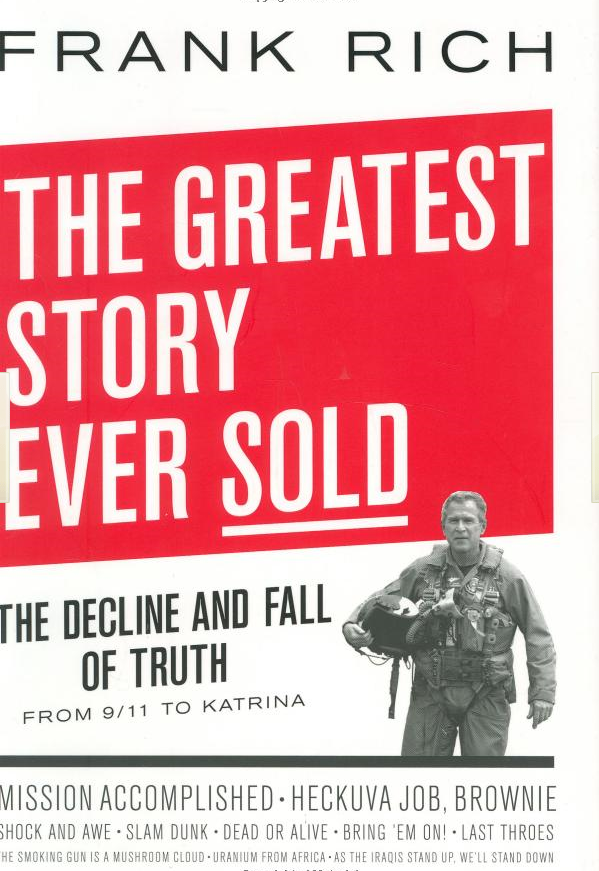
My favorite part of this piece of ideological tripe is its title, which you have also seen about a thousand times before: ECONned: How Unenlightened Self Interest Damaged Democracy and Corrupted Capitalism. Is anyone in America not sick of this formulation by now? “Catchphrase: How This Thing I Hate is Stupid and Did Some Things I Disapprove Of.” Granted, these authors have absolutely nothing new to say, so it behooves them to give their best effort on the cover of the book.

But seriously, authors, how about we lighten up on how seriously we take our books. Not only will no one care about them in three years, but it’s not like they are even standing out in the market anymore. In less than twenty minutes of searching on Amazon I came up with these titles:

  • God’s Politics: Why the Right Gets It Wrong and the Left Doesn’t Get It
  • Bright-sided: How the Relentless Promotion of Positive Thinking Has Undermined America
  • The Great Risk Shift: The New Economic Insecurity and the Decline of the American Dream
  • Gusher of Lies: The Dangerous Delusions of “Energy Independence”
  • Seeds of Terror: How Heroin Is Bankrolling the Taliban and al Qaeda
  • One Nation, Underprivileged: Why American Poverty Affects Us All
  • Broken Government: How Republican Rule Destroyed the Legislative, Executive, and Judicial Branches
  • Big Lies : The Right-Wing Propaganda Machine and How It Distorts the Truth
  • The Republican Noise Machine: Right-Wing Media and How It Corrupts Democracy
  • The Eliminationists: How Hate Talk Radicalized the American Right
  • Perfectly Legal: The Covert Campaign to Rig Our Tax System to Benefit the Super Rich–and Cheat Everybody Else
  • What’s the Matter with Kansas?: How Conservatives Won the Heart of America
  • Wingnuts: How the Lunatic Fringe is Hijacking America
  • Guilty: Liberal “Victims” and Their Assault on America
  • Tear Down This Myth: How the Reagan Legacy Has Distorted Our Politics and Haunts Our Future
  • Idiot America: How Stupidity Became a Virtue in the Land of the Free
  • The Dark Side: The Inside Story of How the War on Terror Turned Into a War on American Ideals
  • The Myth of a Christian Nation: How the Quest for Political Power Is Destroying the Church
  • The New Color Line: How Quotas and Privilege Destroy Democracy
  • Tragedy & Farce: How the American Media Sell Wars, Spin Elections, and Destroy Democracy
  • Common Nonsense: Glenn Beck and the Triumph of Ignorance
  • Tears of a Clown: Glenn Beck and the Tea Bagging of America
  • The Raw Deal: How the Bush Republicans Plan to Destroy Social Security and the Legacy of the New Deal
  • Monsters to Destroy: The Neoconservative War on Terror and Sin
  • Obama Zombies: How the Liberal Machine Brainwashed My Generation
  • Power Grab: How Obama’s Green Policies Will Steal Your Freedom and Bankrupt America
  • Over the Cliff: How Obama’s Election Drove the American Right Insane
  • Obamanomics: How Barack Obama Is Bankrupting You and Enriching His Wall Street Friends, Corporate Lobbyists, and Union Bosses

. . . and I was nowhere near exhausting the supply of titles bearing this meme. I really despise this fad in publishing and writing, as should all true Americans. In fact, you can pretty much live by this rule of thumb: any book containing this kind of trope for its title is not worth reading, period.

Milquetoast: How Bland Titles Let Authors Act Like Kids and Undermine Democracy Read Post »

The Legal Labor Cartel

Political Correctness, Private Security & Law, Protectionism, The Basics
Share

“The truth is that legislatures and Courts have made lawyers a privileged class, and have thus given them facilities, of which they have availed themselves, for entering into combinations hostile, at least to the interests, if not to the rights, of the community – such as to keep up prices, and shut out competitors. The natural result of such combinations also is, that the mass of the members will do more or less to screen individuals from suspicion. The consequence is, that the people have imbibed an extreme jealousy towards them…. Now if the profession were thrown open to all, lawyers would no longer be a privileged class – they probably could no longer enter into combinations that would be of any avail to them, and the jealousy of the people towards them would be at an end.” Lysander Spooner, To the Members of the Legislature of Massachusetts, August 26, 1835.

Lawyers, like doctors, are part of a class of people who must join what amounts to a labor cartel in order to lawfully ply their trade. Bar associations have territories, and they drive up the price of legal services in those territories by limiting entry by service providers. Talk of the lawyer’s “professional responsibility to provide legal services to those unable to pay” stems from guilt about this anti-competitive status quo in the legal services market. Why should lawyers owe anyone relief if they didn’t first create the burden to be relieved? …

The Legal Labor Cartel Read Post »

What Do the Montgomery Bus Boycotts and Trash Collection in San Francisco Have in Common?

(Austrian) Economics, Anti-Statism, Business, Police Statism, Racism
Share

“Dr. King did not make the boycott, the boycott made Dr. King.”

~ Veterans of the Civil Rights Movement

The lessons of the past keep being repeated, over and over and over, and…

Blogger Mike “Mish” Shedlock posted a fascinating story on his website regarding a situation in San Francisco.  In “Trash Collecting Entrepreneur Squashed In San Francisco” he cites one of his respondents, known simply as Michael, who relates a story about trash collection.  One of the customers of the local trash collection service—a contractor referred to as Joe—got fed up with paying $37 per trash can, per week, for garbage removal.  He and his neighbor began to take their own trash for disposal at a local dump, using “Joe’s” truck.  Shortly, other neighbors joined their informal garbage disposal network, opting to pay the contractor $10 a week for more service than they were getting from the city union.  Soon, after their little business had begun to unexpectedly take off, their competitors decided to call in the big guns.

When the local garbage company and its union found out about “Joe” they complained to the city. Within a year a law was passed stating that garbage service was now mandatory for all residents at the price the city’s monopoly charged, which was shortly raised.  And “Joe”?  For a while he still took our recyclables until he was fined $4000, even though he had our permission.

None of this is really that surprising.  The State often passes laws to prevent competition.  For example, Lysander Spooner’s attempts to compete with the post office led to the passing of laws specifically designed to prevent competition in delivery of first class mail.  Recalling my Southern pig farming roots, I’d offer this metaphor.  When a hog is sucking the teat, he tends to fight to keep his place in line.  He cares not about his siblings and their hunger.  Nor does he care that he is full.  He cares about one thing:  maintaining vapor lock on that teat.  With apologies to any unionist garbage men in our studio audience, the garbage collection unions employed by the city of San Francisco are comparable to government teat suckers, so their reaction to some random guy actually providing service and “stealing” their business is no surprise.  What I find ironic is this.  Not only does this situation in San Francisco compare to Spooner’s mail delivery business, it also reflects the scenario during the Montgomery Bus Boycotts.

Consider:  When the Montgomery Bus Boycotts began, black people immediately tried to find alternative means of transportation.  This was a classic market response.  Some of the local taxis, specifically the ones driven by other black people, began to offer reduced-price rides. They charged a fare equal to the cost of a bus ride.  How did the City of Montgomery respond?  The city began to fine taxis for charging reduced fares.  They made it against the law to charge whatever you wanted for the service you sold to customers who voluntarily sought you out.  (Sound familiar?)  Not to be outdone (and using techniques from similar boycotts in other places), the black citizens organized extensive carpool options.  These were people attempting to use their own resources—pieces of private property known as automobiles—to provide a voluntary service for people who needed rides.  How did the City of Montgomery respond?  The city forced insurance carriers to drop coverage for any such car.  Note that this was a struggle between citizens of Montgomery who happened to be black and the City of Montgomery—an arm of the government.

Any competent student of U.S. history knows how all this played out.  The boycott lasted for a very long time, much longer than comparable ones in other cities.  The federal government eventually rode to the rescue, passing legislation that required the bus company to treat all passengers equally.  What is generally not known is this.  The bus company, losing money hand over fist early in the boycott, was actually considering a way to acquiesce to the citizens’ demands early in the boycott, since a large percentage of the bus company’s ridership was black people.  (They say the way to a man’s heart is through his stomach.  I say the way to a racist’s heart is through his wallet.)  Furthermore, the business community of Montgomery, also feeling the burn of less black spending, formed a group called the Men of Montgomery with the express purpose of finding a way to end the boycott.  One could argue that it was only because the city blocked alternative travel options and outside financiers “spotted” the bus company money that the whole thing wasn’t over in a few weeks.

One arm of the State ostensibly stopping another arm of the State from infringing on black folks is an example of the irony of coercion.  One would be wise to learn from the words of Laurence J. Peter, “A man convinced against his will is of the same opinion still.”  The initial statist actions—of the City of Montgomery—had the effect of forcing those who did not want to pay for poor service to walk, and for much longer than the market would have otherwise allowed.  The secondary statist actions—the laws passed to supposedly protect black bus riders in Montgomery—gave those against whom the law was enforced an excuse to remain upset for years to come.  Would the owners and operators of the bus company have eventually given in, faced with bankruptcy?  We’ll never know, but I bet it’s a lot harder to be mad at a paying customer who is not the beneficiary of statist action.  (As an aside, Rosa Parks was not the first black person to refuse to move from her seat, but that’s probably another essay.)  Certainly one has to admire the tenacity of those who risked so much for a privilege for which they should not have even had to ask.  The courage of those on the front lines in Montgomery cannot be overstated!  Still, it would have been nice to see if Montgomery would have become the epicenter of a black-owned bus and taxi company movement.

Either way, we’ll never know.  The rest is history, and it keeps repeating itself.

(Cross-posted at LRC.)

What Do the Montgomery Bus Boycotts and Trash Collection in San Francisco Have in Common? Read Post »

Left-Libertarians Admit Opposition to “Capitalism” is Substantive

(Austrian) Economics, Libertarian Theory, The Left
Share

I’ve noted in recent posts that while some left-libertarians seem to oppose standard libertarians’ positive endorsement of “capitalism” for semantic or strategic reasons, for others they actually oppose the substance of what libertarians mean by (non-crony, non-corporatist) capitalism (see, e.g., Capitalism, Socialism, and Libertarianism, and links in that post; see also Wirkman Virkkala’s post A capital ism?). An example of those with a more semantic or strategic concern would be Sheldon Richman, who is concerned about the “baggage” associated with the word, which will hamper our getting our pro-property rights, libertarian message out. Thus he favors using “free market” instead, but as far as I can tell this is similar to what we mean by “capitalism”–a libertarian society with a market based on respect for property rights, which of course includes private ownership of the means of production (and everything else). (See also Sheldon’s comment to Should Libertarians Oppose “Capitalism”?) Another would be Jock Coats, who notes here that while the baggage of the term “capitalism” might have turned him off had he not also seen the term “free-market anti-capitalism,” now that he understands the term he is “quite happy to be identified as an Individualist Anarchist/Mutualist and at times an Anarcho-Caplitalist,” and is “for keeping ‘capitalism’ as a word in our lexicon.”

To be clear, I think the semantical and strategic debate is one we can have, but it’s different than a substantive disagreement–and we can have that discussion too. But these are separate discussions and should not be intermingled. This leads to confusion at best and equivocation and dishonesty (on the part of leftists) at worst.

In my view there is little doubt that libertarians who have concerns about the appropriate words to use or strategic matters are of course libertarians. We just differ on the best way to convey and spread and communicate about our ideas. But those who disagree on substance may simply not be libertarians. This should not be masked by conflating the discussion with more mundane issues of semantics and strategy.

Now some of the left-libertarians more concerned about terminology and strategy deny or downplay the charge that at least some of them have much more than a mere lexical disagreement with us. So it is good that some of them are willing to explicitly admit this. Take, for instance, one Roman Pearah, who writes in Hmmm…No, Sir. I Don’t Like It.: …

Left-Libertarians Admit Opposition to “Capitalism” is Substantive Read Post »

Scroll to Top