Is English Common Law Libertarian?
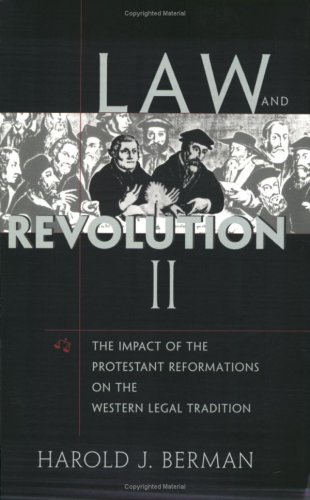
(Austrian) Economics, History, Libertarian TheoryIn a fascinating blogpost, Michael McConkey asks Is English Common Law Libertarian? [bad link; archived version, and repixeled below] Many libertarians tend to view the common law as being quasi- or proto-libertarian. McConkey argues, relying largely on Harold Berman’s classic Law and Revolution, II: The Impact of the Protestant Reformations on the Western Legal Tradition (v. 2), that,
in [Sir Edward] Coke’s time [1552-1634] and far before, England was characterized by what modern libertarians would celebrate as legal polycentricism. There was a wide range of legal and judicial systems at work. In addition to the common law, there was ecclesiastical and canon, manorial, merchant, Roman, martial and Chancery law: not an exhaustive list! These all had their own laws and courts. Furthermore, this diversity of judicial options had exactly the benefits which pro-polycentricist libertarians would anticipate. Anyone who felt they were being abused in one court system could appeal to another for redress. Berman tells of cases where individuals were imprisoned by one court system, but managed to secure release by the authority of another court system.
McConkey argues that this kind of polycentrism is quasi-libertarian, but that Coke and other common-law proponents largely destroyed it by pushing the common law and its central place to the fore:
[polycentrism] is just this kind of mitigation of legal and judicial monopoly that libertarians (certainly voluntarists and libertarian anarchists) aspire to with their opposition to the state. Yet, make no mistake, Coke and his fellow common lawyers were not conspirators in this regard. On the contrary, their rooting of English common law in a mythical antiquity was precisely intended to give it the historical authority not only to triumph over monarchial sovereignty, but over all the other competing courts in England. Coke and crew’s battle with James I was not a battle against legal monopoly, but for it – just the promotion of a different claimant to the throne of legal monopoly.
Further, this was achieved precisely by means of the distinctly common law premise of finding historical sources upon which the common law could claim superior jurisdiction. Legal systems based upon positive or natural law, by definition, did not have the fundamental recourse to historical revisionism (temporal imperialism) that was at the core of the common law tradition. It was uniquely situated to win at this game. And, of course, this project of institutional imperialism has proven remarkably successful: today awareness of a once polycentric English legal order has all but vanished from popular knowledge.
I see two lessons here, one for advocates of common law as libertarian and a second for promoters of Hayekian spontaneous order as a kind of meta-reason that leads inexorably to freedom. From the perspective of libertarian values, not only does the common law tradition have blood on its hands (the blood of legal polycentricism), but it has logically built into its conceptual DNA a will to power. The temporal imperialism of its historical revisionism turns a blind eye to the subjectivity inherent in any interpretation of the past. Coke himself was prone to find “new” precedents when he changed his mind on a legal matter. History provides far too rich a buffet from which the jurist may pick and choose the precedents of preconceptual convenience — including common laws’ own legal supremacy.
Secondly, as valuable has been Hayek’s observation on the nature of the market as a spontaneous order, emergent rather than planned, the tendency to apply this same lesson to other social domains overlooks the ubiquity of power. Whether or not it is possible in today’s world to have markets free of coercion and struggles for power, it seems unlikely in other domains of society. Certainly no existing order’s historical roots can ever be claimed to be free of such machinations. Common law, both its practice and its ascendance, is without doubt the result of spontaneous order. But neither the seeds nor the fruit of that result can be considered consistent with or beneficial to libertarian aspirations for freedom. The virtues of spontaneous orders for freedom, whether or not they’re always superior to planned ones, cannot be credibly assumed in any given instance.
None of this is to deny that there is some kind of potential for a market based customary law system to deal with the inevitable gray areas and space of subjective dispute that will arise even amid the most conscientious application of natural law. Its foundation though, unlike common law, should not be in subjective interpretation of history, but the aggregate application of subjective preferences, free from coercion. That may be a tall order, but it’s a picnic compared to getting consensus on the meanings of the past. And it is, indeed, the real lesson of value from Hayek on the virtues of spontaneous order.
See McConkey’s interesting post for elaboration. For related matters, see my posts/articles:
- Legislation and the Discovery of Law in a Free Society,” Journal of Libertarian Studies 11 (Summer 1995), p. 132;
- Legislation and Law in a Free Society,” Mises Daily (Feb. 25, 2010);
- The (State’s) Corruption of (Private) Law, 2012 Annual Meeting, Property and Freedom Society (Sep. 27 to Oct. 2, 2012);
- Property Title Records and Insurance in a Free Society.
Is English Common Law Libertarian?

 Though far from universally held, there is an opinion on the part of many libertarians that the English common law is a bastion of libertarian virtue. This view is most closely associated with the thought of F.A. Hayek, but hardly exclusively so. There is an irony in this view, though. For part of the reason Hayek was supportive of the common law tradition was his conviction in the merits of social order as spontaneous and emergent.
From this perspective, common law, with the implications of evolving precedents, based upon changing social norms, seemed superior as a basis for libertarian law than the centralized assumptions of legal positivism – in which legal legitimacy was determined by the effectual imposition of law by legal central planners. As valid as this way of thinking may appear, the irony is that our current perception of common law is itself a product of spontaneous order. What Hayekian fidelity to spontaneous order too often overlooks is that it is often the compromise from power struggles, neither side of which is libertarian.
A valuable corrective to this error in perception is provided by the work of the late Harold Berman. Though, perhaps, better known as one of the leading scholars of Russian/Soviet law, in a parallel career, Berman distinguished himself as a trenchant and insightful student of Western legal history. In his scholarship, he tells an intriguing story of how our current perception of the English common law came to be. It is in fact the product of the early 17th century power struggle between King James I and the jurists of the King’s Bench, particularly Edward Coke.
James I is historically notorious for his forceful and uncompromising defense of  monarchial absolute sovereignty. And he rooted this defense in the implicit King’s mystical body doctrine, a theological doctrine smuggled into medieval philosophy and legal theory long before the rise of the ultimately star-crossed Stuart dynasty. (Those who’d like to understand these developments better should check out my talk to the Libertarian Dinner Club of Vancouver.) Part of this mystical body doctrine was the idea that all kings of England were in fact but one king of England. They appeared in different natural bodies, but the king was eternal and transcended any individual body. In this way, James’ defense of his sovereignty was very much rooted in the necessity of historical precedent.
Coke and the common lawyers, as they came to be called, did get into a good deal of trouble with James. Edward Coke himself spent seven months in the Tower of London. Their situation would have been far worse, though, had they the audacity to launch a frontal assault upon James’ theoretical self-legitimization. Instead, rather brilliantly, Coke avoided such consequences by ignoring James’ theoretical legitimization and arguing, in agreement with James, that indeed historical precedent was the centre piece of English law. However, he then proceeded to effectively undermine James’ claim to sovereignty by “demonstrating” that it was the history of judicial rulings, by judges, that provided the substance of English laws (not, as it turns out, monarchs).
Hence, by accepting James’ premises, ignoring his intentions, and applying the former in disregard of the latter, Coke effectively undermined James’ conclusions and thereby his legitimate claim to sovereignty. Without doubt, this was one of the great intellectual sleight of hands of all time. And, insofar as it contributed to the downfall of absolutist monarchy – providing theoretical fuel to both the English and Glorious Revolutions later in the century – libertarians might be tempted to celebrate it. However, that would be jumping ahead too quickly. For, as Berman makes clear, Coke and the common lawyers were not merely crucibles of liberty. On the contrary, this promotion of common law over monarchical sovereignty was only one part of a larger project of legal imperialism within England.
This is true in two ways. First, the idea that the common law is a great, venerable tradition going back to antiquity is part of the ideological construction of Coke and his crew. This idea of the common law was in fact invented in the 17th century, not in Anglo-Saxon England and certainly not in pre-Roman antiquity as Coke would have it. It was a revisionist history of English law. So there was a kind of temporal imperialism involved. However, more concerning is that the purpose of this temporal imperialism was to buttress an institutional imperialism. The triumph of this revisionist history of Coke and the common lawyers has left many of us with a distorted picture of English legal history.
 The fact is, in Coke’s time and far before, England was characterized by what modern libertarians would celebrate as legal polycentricism. There was a wide range of legal and judicial systems at work. In addition to the common law, there was ecclesiastical and canon, manorial, merchant, Roman, martial and Chancery law: not an exhaustive list! These all had their own laws and courts. Furthermore, this diversity of judicial options had exactly the benefits which pro-polycentricist libertarians would anticipate. Anyone who felt they were being abused in one court system could appeal to another for redress. Berman tells of cases where individuals were imprisoned by one court system, but managed to secure release by the authority of another court system.
Surely it is just this kind of mitigation of legal and judicial monopoly that libertarians (certainly voluntarists and libertarian anarchists) aspire to with their opposition to the state. Yet, make no mistake, Coke and his fellow common lawyers were not conspirators in this regard. On the contrary, their rooting of English common law in a mythical antiquity was precisely intended to give it the historical authority not only to triumph over monarchial sovereignty, but over all the other competing courts in England. Coke and crew’s battle with James I was not a battle against legal monopoly, but for it – just the promotion of a different claimant to the throne of legal monopoly.
Further, this was achieved precisely by means of the distinctly common law premise of finding historical sources upon which the common law could claim superior jurisdiction. Legal systems based upon positive or natural law, by definition, did not have the fundamental recourse to historical revisionism (temporal imperialism) that was at the core of the common law tradition. It was uniquely situated to win at this game. And, of course, this project of institutional imperialism has proven remarkably successful: today awareness of a once polycentric English legal order has all but vanished from popular knowledge.
I see two lessons here, one for advocates of common law as libertarian and a second for promoters of Hayekian spontaneous order as a kind of meta-reason that leads inexorably to freedom. From the perspective of libertarian values, not only does the common law tradition have blood on its hands (the blood of legal polycentricism), but it has logically built into its conceptual DNA a will to power. The temporal imperialism of its historical revisionism turns a blind eye to the subjectivity inherent in any interpretation of the past. Coke himself was prone to find “new” precedents when he changed his mind on a legal matter. History provides far too rich a buffet from which the jurist may pick and choose the precedents of preconceptual convenience — including common laws’ own legal supremacy.
Secondly, as valuable has been Hayek’s observation on the nature of the market  as a spontaneous order, emergent rather than planned, the tendency to apply this same lesson to other social domains overlooks the ubiquity of power. Whether or not it is possible in today’s world to have markets free of coercion and struggles for power, it seems unlikely in other domains of society. Certainly no existing order’s historical roots can ever be claimed to be free of such machinations. Common law, both its practice and its ascendance, is without doubt the result of spontaneous order. But neither the seeds nor the fruit of that result can be considered consistent with or beneficial to libertarian aspirations for freedom. The virtues of spontaneous orders for freedom, whether or not they’re always superior to planned ones, cannot be credibly assumed in any given instance.
None of this is to deny that there is some kind of potential for a market based customary law system to deal with the inevitable gray areas and space of subjective dispute that will arise even amid the most conscientious application of natural law. Its foundation though, unlike common law, should not be in subjective interpretation of history, but the aggregate application of subjective preferences, free from coercion. That may be a tall order, but it’s a picnic compared to getting consensus on the meanings of the past. And it is, indeed, the real lesson of value from Hayek on the virtues of spontaneous order.
Bibliography
Berman, H. J. (1994). The Origins of Historical Jurisprudence. The Yale Law Journal , 103 (7), 1651-1738.
Hayek, F. (1973). Law, Legislation and LIberty: Rules and Order (Vol. 1). Chicago: Univeristy of Chicago Press.
Hayek, F. (1945). The Use of Knowledge in Society. American Economic Review , XXXV (4), 519-30.
Kantorowicz, E. H. (1981). The King’s Two Bodies: A Study in Medieval Political Theology. Princeton: Princeton University Press.
Is English Common Law Libertarian? Read Post »